Sarah Allen


Friday, July 13, 2012
Book Trailers
So I think eventually book trailers, once I've done a little more research and had a little more experience, deserve a very in-depth post of their own, but since I'm in a bit of a rush today I thought I'd just leave you with three of my favorites. Three very different styles, everything from very high-end studio produced to very do-it-yourself, but all super fun and effective as marketing tools:
Have a wonderful weekend! And if you have any particular favorite book trailers, link to them in the comments. I'd love to see them!
Sarah Allen
Sarah Allen

Wednesday, July 11, 2012
Why Writers Should Always Be Waiting

Writers always are, and should be, waiting on someone, and I'm trying to see it as a good thing.
Agents. Waiting on an agent means you've accomplished something wonderful. You've finished a huge project and polished it until you can see your reflection in it. Good work.
Critique partners. Waiting on critique partners means you're working. It also means you are brave enough to put your words (your soul) in front of people. Good work.
Competitions. Waiting to hear back about writing contests means you were brave enough to submit, and serious enough to cough up the cash for the entrance fee. Good work.
Publishers and literary magazines. If you are waiting on publishers and literary magazines, you taking some pretty serious, major steps. You are showing the world you mean business. You've worked hard, and you're ready to put that work in front of people. Good work.
Really the hard part about this is knowing what to do while you wait, and the only answer I can come up with to that is to keep writing, keep studying, reading and improving, and keep submitting. We just can't slow down, and eventually something good will come of it all our bleep bleep waiting.
Sarah Allen
Tuesday, July 10, 2012
My Inner-Sadist's name is Dave
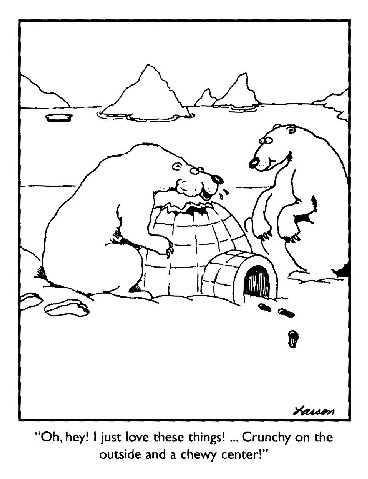
ME: You're such a pessimist.
BOY: Realist.
ME: Pessimist.
BOY: Realist.
ME: Pessimist.
BOY: Realist.
You get the idea. We had similar arguments involving words like naive and optimist.
I like happy things. I like puppies and rainbows and libraries. I hold on to every glimmer of hope I can find, meaning I do my best to consider The Road a happy, hopeful book.
So realizing that the ending of my book was going to be more intense and ambiguous than I originally thought it out to be was strange enough. What was even more strange, though, was how thoroughly I enjoyed writing it.
Maybe it's my tendency to see a lot of hope where there is barely any, but writing my sad(ish) ending rejuvenated rather than depressed me. And getting feedback from my English major friends that basically added up to "I totally loved it, jerk-face" made me nearly giddy with glee. It also made me want to evil laugh like Vincent Price.
Now I am left trying to reconcile this happy, optimistic, humorous real-life side of me with this somber, harsh, somewhat sadistic authorial part of me. And now that its come to my attention, I'm realizing how far back it goes. All the way to high-school, in fact, where my subject matter consisted of a lot of single moms and old men whose wives had left them. When I'm talking with my friends its generally about happy stuff like the Lizzie Bennett Diaries and Chris Evans' butt and I don't know why such a major shift happens when I sit down to write fiction.
So, basically, I've been reading a lot of Dave Barry and Steve Martin to try and see how funny people do it on the printed page. It may not be natural for me, but I want to experiment with and try out some happy, funny stories. Maybe they'll be total crap, but the point is to stretch muscles anyway, right?
Do you have a disparity like this between your real-life and writer selves? If you write funny, how do you do it?
Sarah Allen
Monday, July 9, 2012
Play to your freak side
C. S. Lewis said "We read to know we're not alone." This is why we write. Maybe it seems incongruous to say that our writing becomes better and more relatable when we write from our own specific and unique experiences, but its true. Readers relate to us and our characters as individuals, not as general abstracts.
There are 14 million Mormons in this world. That maybe seems like a lot, until you realize that that is only .002 percent of the population.
One in 2500 girls is born with Turners Syndrome, which makes one in every 5000 people. That is a .0002 percent chance. That means the chance of being born both with Turners Syndrome and being a Mormon is .0000004%. Correct me if my math is wrong (I was in English major, remember) but I'm pretty sure that adds up to about 2800 people in the entire world.
Maybe you have a mentally handicapped brother. Maybe you went to juvy for shoplifting when you were fifteen. Maybe your father was a National Geographic photographer. Think of what makes you absolutely unique, and there is something. Everyone has something.
Ok. So that's one thing I mean when I say play yo your freak side. I would love to write stories about Mormons and girls with Turner Syndrome. But I am of course not going to restrict myself to that either.There are other things about our experience that are still interesting if not as unique as other things. Maybe you're the youngest child. Maybe you're grandpa ran a farm. Maybe you moved as a child. These things still play into our experience, and a lot of people relate to these kinds of things because they've experienced it themselves.
This is my point: maybe these types of experiences aren't especially unique in and of themselves, but the way we experienced these things absolutely is. Maybe there are a lot of oldest children, but nobody was an oldest child like you were an oldest child. Or maybe lots of people visited their grandparents farms in the summers, but not a lot of people visited your grandparents farm. This is why specific and concrete details are so important. Show us the height of the cornfield and give us the smell of the slaughterhouse. We want to feel this place and experience it with you.
I'm not saying everything you write has to be directly autobiographical, because obviously you are going to write things happening to characters that never happened to you, and characters themselves that may be as opposite to you as it is possible to be. However, I think in a lot of ways the details that really bring our stories to life and the subtle themes that we discover as our stories grow are almost entirely autobiographical. At least that's how it is for me. My main characters end up being my main characters because they have something important to say. When I describe a room it is often based on a room from a house I lived in as a child, even if I'm not consciously trying to base it off of that house.
Basically, we are trying to draw our readers in and we do that through making our details as concrete and as specific as possible, and the easiest way to do that is to use details we know first-hand. Not big things, just little things like smells and textures.
And the way we make a name for ourselves is not by writing the same kinds of stories everyone else is writing, but by writing the stories that nobody else is writing. There is no one in the world like you. Use that to your advantage.
What puts you in the .002 percent? Do you find yourself drawing on your own experience for details and themes?
Sarah Allen
Monday, July 2, 2012
So I wrote this thing and now what?
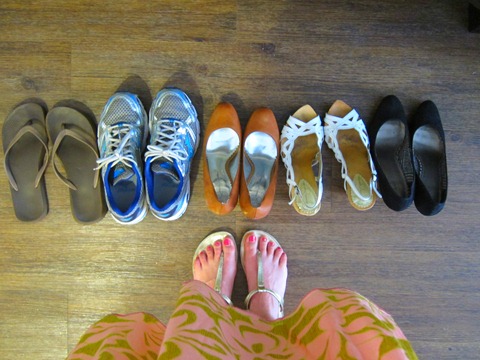
It's been on my mind, because I want to write lots and lots and experiment with all types of genre and form and subject. I've come up with five main routes to go with the pieces that turn out well enough to publish:
1. Literary magazines. This is for your top-notch work. There are magazines for every type of project imaginable, so if your proud of your work, don't be afraid to submit. The best places I know of to find magazines are Duotrope and NewPages.
2. Competitions. Maybe I'm wrong, but it seems like competitions give you the chance to submit to places you wouldn't be able to submit to otherwise. It also comes with a money prize, prestige and potential connections. For writing contests check out Poets and Writers and FreelanceWriting.
3. Self-Publish. There is so much being said about this option, whether its a good or bad one, how one goes about doing it in the first place. My point here is just to say, it's an option. Definitely do your research if you decide to go this route. That goes for every option, but this one in particular. If you have a poetry collection, short story anthology or novella that you just want to get out there, this might be a good way to go.
4. Small Press. This is one I haven't seriously considered until recently, and so my research on it is less extensive than the others. However, while you're querying agents and trying to go the traditional big publishing route, this might be a good choice for the collection of short stories you've been wondering what to do with. There are quite a few small presses that accept unagented submissions, and it might just turn out to be a wonderful experience. You never know until you try.
5. Blog. I've seen several people post short stories and even entire novels via blogs. Honestly this isn't my favorite option, but I can see some uses. If you have a short little something you came up with, incomplete but promising, putting it up on a blog might be a fun way to get some feedback. Maybe the piece doesn't go anywhere or turn into anything, but you can apply the comments you receive to your writing in general, hopefully improving it as you go.
So yeah, while I'm trying for the slow traditional big-publishing route, which I really want, these are other good options to keep in mind for my other projects. Throughout my writing career I would love to use every single one.
Which options are your favorite, and can you think of any I missed? How do you decide which option is best for any given piece?
Sarah Allen
Subscribe to:
Posts (Atom)
