From Sarah, With Joy

*Poet * Author * Wanderluster*

Showing posts with label Writing Process. Show all posts

Monday, October 13, 2014

5 Traits of Seriously Despicable Villains

There is a whole spectrum of antagonists and characters who are just awful people. There's the cackling, hand-wringing villain, the sweet but deadly villain, the shy misunderstood villain, and even villains who probably more like anti-heroes (*ahem* Snape *ahem*). These types of characters are kind of fun to watch. We like to see them be witty and snarky or finally show their true inner feelings.


But there's a difference between characters we love to hate, and characters we just point-blank hate. Period.

I'm talking about the latter kind of character. I'm talking about characters who are honestly no fun at all, who make our skin crawl, who can even make us sick to our stomach. Because sometimes those are the characters our protagonists are going up against. I can think of quite a few characters who are rude, dishonest, even petty, who people still end up rooting for. So what is that makes a character truly despicable?

To be honest, I'm not very naturally good at writing villains, which is why I've been thinking about this lately. When I try to write out and out villains I typically end up liking them too much, and then they turn out more like anti-heroes than real villains. So I've been thinking of villains that I consider truly horrific, and trying to see what traits those characters have that make them so utterly loathsome. Here are some I've come up with.

1. Misogyny and Racism. The second a character in a book or show evinces an inkling of misogyny or racism, they loose all credibility. That is the instant I stop being able to take them seriously in any way. Everything they say from that point on becomes pure bunk. And if a character is so unsympathetic you don't even consider them worth your notice, I think that's a successfully unsympathetic character.

2. Mistreatment of Subordinates. This is a big one. You know the classic screenwriting book, Save the Cat? Well, the title of that book comes from a type of scene that typically comes early on in the movie. It's either a "save the cat" scene or a "kick the cat" scene. If a character seems aloof, rude, or otherwise unlikable, but then comes across a stuck cat and tries to help, we start seeing the possibility of redemption for that character. On the other hand, if a character seems pleasant and charming but, when left alone, starts kicking cats, we as an audience feel we've seen the characters true and contemptible nature. "Kicking the cat" comes in many forms, whether its manipulation, physical violence, or something else. But if you want a villain your readers truly hate, a character who mistreats those with less power is a good way to go.


3. Lack of Remorse. In my opinion, one of the most successful villains ever written is Wild Bill from Stephen King's The Green Mile. (Trust Stephen King to come up with the great villains. And Sam Rockwell's brilliant portrayal in the film adaptation doesn't hurt either.) One of the things that makes Wild Bill so gut-wrenchingly awful is that he is not only outright racist, he not only assaulted two little girls, but he thinks its funny. He spends his time laughing and shouting awful things to the guards and other inmates, and only takes things seriously long enough to be let out of the straight jacket before he's back at it again. If we sense true repentance in a character, I think we can forgive them nearly anything. But lack of remorse equals lack of sympathy.

4. Sense of Entitlement. In almost any crime show, every few episodes you'll come across a criminal who's committing crimes at least in part because they feel they are above the law. They feel that they are above the "common crowd." They are special. This sense of entitlement is particularly awful when combined with abuse of those less powerful. In low doses this basically just makes readers roll their eyes, but taken to extremes can make your audience want to pull the dang rug out from under this idiot in as dramatic and violent a way as possible.


5. Sadism. This one can really get your skin to crawl. And it's one of the reasons I had to stop watching Criminal Minds, because they did this so strongly in a lot of their villains. But let's take a lighter example, like Princess Bride. Prince Humperdink's manipulation of his subordinate (Princess Buttercup) is totally creepy, but equally creepy is the way Count Rugen's eyes get wide with pleasure as he's torturing Wesley in the Pits of Dispair. (Don't even think about trying to escape. Also I still can't believe that's Christopher Guest). Adding that layer of liking the terrible things they're doing to other people really ups the readers disgust.

Now it's your turn. Which are your favorite examples of truly despicable villains? Are there more traits we should add to this list?

Write on!

Sarah Allen

This Week on Social Media:
For more frequent updates, writing tips, and funnies, follow on FacebookTwitterGoogle+
YouTubePinterestTumblrGoodReads, and/or Instagram.

SUBMISSION OPPORTUNITIES:

  • Cicada Magazine: Cicada YA lit/comics magazine seeks submissions for an upcoming issue on Tricksters and Thieves. We’re on the lookout for tales of pirates, con artists, and trickster gods; explorations of glamour, enchantment, sleight of hand, and other crafts of illusion; and investigations of the slipperiness of the authentic self in a world of performances. We’re also interested in forms of creative appropriation: translation, fan fiction, retold tales, found art and poetry. Due Oct. 31.
  • Coe Review Magazine: Coe Review, established in 1971 and run by an entirely undergraduate editorial staff, wants to read your poetry and fiction. From our hundreds of submissions, we choose those with refreshing perspectives, forms, styles, and messages. Due Oct. 25.
  • Damselfly Press: damselfly press seeks to promote exceptional writing by women. We welcome work from female writers of all experiences. If you’d like to submit, please first visit our guidelines section before emailing your submission. Rolling Submissions.
  • Storm Cellar Magazine: Storm Cellar, a literary journal of safety and danger, seeks amazing fiction, poetry, creative nonfiction, and flash. We welcome visual art in any medium. Midwesterners and women are encouraged; we're listening for diverse voices. Rolling Submissions.

SPOTLIGHT:

Monday, September 29, 2014

The Writer's Secret Weapon For Infinite Ideas: Incongruity

Perhaps the question writers are most often asked--and perhaps the one we have the hardest time answering--is where do we get our ideas.

Not only is it unclear where ideas come from, there seems to be no reliable way to make them come when we need them. If only there were a magic box under every writers bed that popped out the right idea whenever we needed it. If only there were elves that came out at night and finished that scene we've been stuck on. If only there were a tree that dropped idea apples every day at 5:47. Then we'd have an easy answer.

But, unfortunately, none of these things are actually available. The reality is much more of a slog. Whether we're trying to brainstorm an idea for a new novel, or we're stuck in the middle of our WIP and need an idea to get it moving forward, writers spend lots of time glaring at computer screens.


Now, there may not be a magic idea tree in every writer's backyard, but there may actually be a strategy or trick that's so helpful it may as well be magic. At least it has been incredibly helpful for me. This strategy can help at any stage of the brainstorming process--whether we're developing a character, designing our setting, or trying to figure out how to add more tension to a scene. This strategy--this secret weapon--is incongruity.

In other words, put something there that doesn't belong.

At least, something that doesn't seem to belong on the surface. Say you're working on a novel about two college roommates. One is a biology major, the other is going into physical therapy. Say you're in the middle of this novel, and you're stuck on a scene that seems to be falling completely flat. Then imagine the physical therapist finds a dozen Duke Ellington records under the biologists bed. That's something that doesn't appear to belong. That adds interest and intrigue.

Now, say you're developing your characters and setting. Add something to your character or setting that doesn't seem to belong. Here are some examples:


What is a piano doing in the middle of a possibly burnt forest? Aren't you intrigued by the back story of a man with a Mohawk and a Santa suit? These kinds of seeming incongruities are what catch and keep the readers attention. They are little mysteries your reader will keep reading to figure out. 

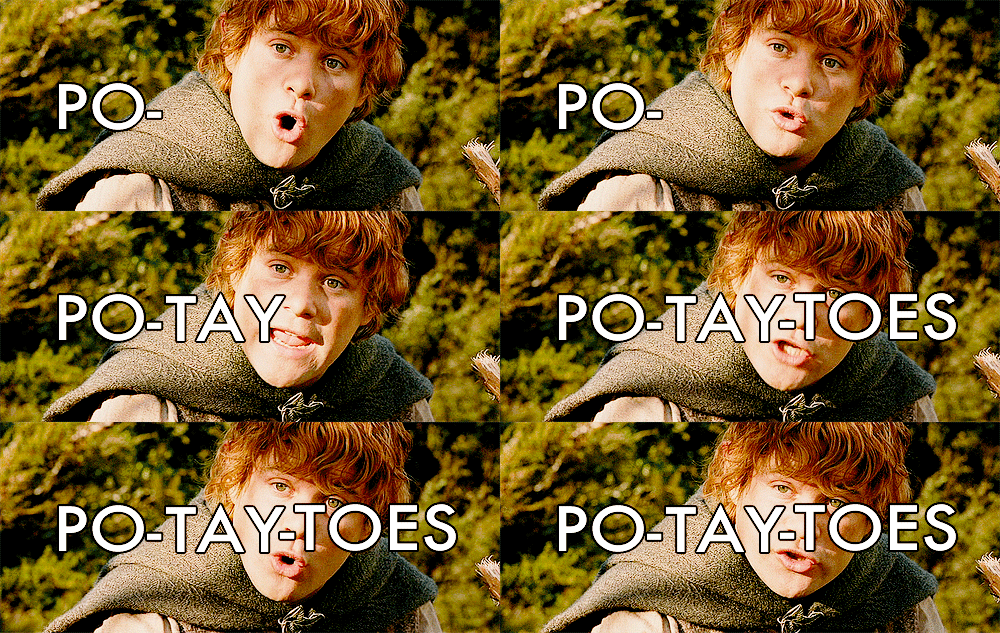
There are entire stories based on and extrapolated from a single incongruity. A human in Santa's workshop? That's the movie Elf. What about a blond high-school beauty queen going to Harvard Law School? Legally Blonde. That one is particularly fun because you get to see a bunch of stereotypes get busted. And perhaps one of my favorites--a meter-high gardener helping to take down a Dark Lord and his entire kingdom? Hello Samwise Gamgee :)

So next time you're trying to brainstorm ideas for your next project, or you're trying to flesh out your next main character, or you're trying to figure your way out of a mucky middle bit, try this simple technique. Try simply adding something that doesn't seem to belong, and see where that takes you. You may discover something delightful. Like Will Ferrell in yellow tights.

Write on!

Sarah Allen

This Week on Social Media:

For more frequent updates, writing tips, and funnies, follow on FacebookTwitterGoogle+
YouTubePinterestTumblrGoodReads, and/or Instagram.

SUBMISSION OPPORTUNITIES:

  • The First Line Magazine: All stories must be written with the first line provided. Due Nov. 1
  • Writers Digest: Your Story 61Write the opening sentence (just one, of 25 words or fewer) to a story based on a photo given. You can be funny, poignant, witty, etc.; it is, after all, your story. Due Oct. 13.
  • BathHouse Magazine: The international hypermedia journal BathHouse is currently accepting submissions for its 12.1 issue with the underlying theme of "International". Due Nov. 17.
  • Cactus Heart Magazine: Speculative themed issue. We want beautifully written fantasy, science fiction, steampunk, & reimagined fairy tales. Send your character-driven stories & poems full of magic, spaceships, & clockwork gadgets; send stories & poems that play on tropes, & make us reflect on our humanity along with gods, banshees, & cyborgs. Due Jan. 10.
  • Drunken Odyssey Podcast: The Drunken Odyssey, an amazing writing podcast, needs personal essays for its “Book that Changed my Life” segments. Send pitches for essay ideas to thedrunkenodyssey@gmail.com. For approved pitches, essays should be between 500 and 800 words. Ongoing. 

SPOTLIGHTS:

Monday, September 8, 2014

How To Write In A New Genre (And 4 Reasons You Should)

One of my favorite things to do is venue research--finding places where I might place some words. In fact I have to be careful that browsing magazine listings doesn't take time away from actual writing. But I love to browse the calls for submission at NewPages or look at the awesome list of consumer magazines at Funds For Writers. Often writers will have a page on their website or blog that lists their publication credits, sometimes years and years back, and you can see all the magazines they've contributed to. Another great list of potential places to submit. One of my favorites, particularly for speculative fiction writers, is the website of Mary Robinette Kowal.

One thing this habit has done, besides necessitate more conscious and increased focus on my main projects, is encourage me to expand my literary horizons.

I've always been more of a contemporary writer. The short story I wrote in my eighth grade creative writing class was about a single mom seeing her son in her dead husbands cigarette scented leather jacket. (Not presumptuous at all, right?). I adored Chronicles of Narnia and Chronicles of Prydain, but most of my childhood reading was stuff like Walk Two Moons and The Great Brain and Cricket in Times Square.

My point is this: though my reading habits have grown and shifted, and though almost all my recent work is sort of a blend of contemporary and fantasy, I've never really written a hard sci-fi or high fantasy piece.

Some of the best opportunities and venues I've come across in my research are for hard sci-fi and high fantasy.

Which means I'm needing to stretch myself, if I want to participate in these opportunities. In fact, I'm working on a piece now that I hope to submit for consideration in a sci-fi anthology. It is definitely a challenge, but I feel like I am learning a lot, and seeing some great potential benefits.

So if you want to write in a genre you've never tried before, how do you do it? And why should you even try?

One of the most important tools for writing in a new genre is reading in that new genre. That is the best way to get the flavor and tone of the tradition you are joining. There are a lot of things about writing that one learns best through a sort of osmosis, and reading in a new genre can help you avoid cliches and pitfalls that might be specific to the genre you're trying out.

Try reading blogs from authors in the new genre. This, along with the reading, can be a sort of genre crash course. Author bloggers often talk about the ins and outs of their genre, and reading these posts can help you get some of the "insider" scoop. For example, if you want to try romance, reading the blogs of some established romance writers might help you figure out genre pillars romance readers expect, as well as cliches to avoid to help you stand out in a positive way.

Most of all, be you and have fun. In some ways, I feel like these strict genre delineations are a bit silly and can be the opposite of useful. I think what many of us write already has a little bit of this and a little bit of that. (This is why when query time comes around, it can be tempting to make the "It's a rom-com meets horror but also with cowboys and a dash of the paranormal" mistake.) The point is, we are all extremely unique, and its important to bring to the table what only you can bring to the table. Learn the genre, know the genre, then do it how only you do. Just go for it.


Okay though. This does kind of seem like a lot of work, right? And maybe a little intimidating. Definitely has been that way in my experience. So why do it? Why not just stick with our comfort zone?

1. Your overall writing will improve, including in your normal genre. Imagine someone at the gym who is really working on building those biceps. They work those biceps hard, and know all the best methods and tricks. The thing is, if they do nothing but work the biceps, they run the risk of stagnation. To help them progress, they should remember that it's all connected, and that their quest for perfect biceps can in fact be assisted by working other muscles like the triceps and deltoids.

Such is the case with genre, in my opinion. I have learned things in experimenting in new genres that I can most definitely take back and incorporate into the stuff I typically write. Here's a graphic that shows what I mean, and I think is a great place to start.

2. You will make new industry connections. Plain and simple. By, for example, submitting to genre magazines you wouldn't otherwise have submitted to, you will make those connections you might have missed out on. And those connections can lead to additional great opportunities, both in and outside of your regular genre.

3. You will broaden your writing resume. Writing in a multitude of genres gives us versatility and flexibility. We grow our street cred. Then when more opportunities come up that we want to pursue, we have the experience and even some word count to back it up. I may be in the beginnings of my hard SF journey now, but next time I see a great opportunity in that genre, I'll have that much more experience in my tool belt. I think most of us rather enjoy working in lots of genres, like we enjoy reading in lots of genres, so starting now and building up that broad resume can really get us off to a good start.

4. You will find new readers. Again, I think most of us typically read in a lot of genres. I mean, we may have a genre we gravitate to more often than others, but I think most of us mix it up every once in a while. And so do our readers. A reader who typically reads hard SF might very well also enjoy contemporary YA. In other words, even if a prospective reader discovers me through a science fiction magazine, that may help me grow my readership in the other genres. Same with anyone. If you typically write historical novels but then decide to submit a short story to Ellery Queen's Mystery Magazine, the overlap could very well help you find more readers for your historical novels.

Do you think its worth it to try writing in a new genre? What is your typical genre, and what others might you want to try?

Write on!

Sarah Allen

This Week on Social Media:

For more frequent updates, writing tips, and funnies, follow on FacebookTwitterGoogle+
YouTubePinterestTumblrGoodReads, and/or Instagram.

SUBMISSION OPPORTUNITIES: 

  • Tennessee Williams Literary Festival Short Fiction ContestSubmit a short story, up to 7000 words. Grand Prize: $1,500, plus airfare for the next Festival in New Orleans, VIP All-Access Festival pass for the next Festival ($500 value), plus publication in Louisiana Cultural Vistas magazine. $25 entrance fee. Due Nov. 16.
  • Beecher's Magazine: Beecher’s Magazine, an annual print journal produced by graduate students at the University of Kansas, seeks inimitable poetry, fiction, nonfiction, and art for its fifth anniversary issue. Due Feb. 14.
  • Pentimento: Pentimento, a literary magazine for the disability community, is accepting submissions for our Winter 2014/2015 issue. We publish disability-related essays, poetry, and fiction and artwork and photography by individuals with a disability. The writing topic for the Winter issue is “Romance,” and we’re seeking true stories regarding romance and disability. Due Sep. 30
  • The Last LineFrom the fine folks who bring you The First Line: We're going to try a little experiment. We've got a last line for you, and we want you to give us the story that ends there. We'll follow the same guidelines as The First Line (300-5,000 words), with the twist that all of your stories must end with the last line provided. Due Oct. 1
  • Building Red AnthologyWalrus Publishing, an independent press from St. Louis, Missouri, is now accepting submissions for our sci/fi anthology, Building Red-The Colonization of Mars. Due Nov. 1.

SPOTLIGHTS:

Monday, August 4, 2014

5 Tips for Writing 3 Dimensional Characters

I submit to you that writing well-rounded and complex characters is maybe the most important part of writing a story. Some may say that a page-turning plot is the most important, but engaging characters are what pull the reader in and keep your story in the reader's mind long after they read the last page. I have read plenty of books and seen plenty of movies where the plots were slow, but because I cared so much about what happened to the characters, I was hooked the entire time. And vice versa. I have read plenty of books with thrilling plots that I raced through, then when I was done, threw the book over my shoulder and could hardly remember anything I'd just read. (*ahem* Da Vinci Code anyone? *ahem*)

So how do we create characters that live and breathe on the page, and stay with the reader for a long time after they're gone? How do we write characters that feel real? I'm definitely still working on improving this myself, but I thought I'd list a few things I've seen done in my favorite books that might help all of us write more three dimensional characters.

1. Characters are NOT place-holders: I recently saw a movie that was quite well done, yet many of the characters felt flat. I thought about it that night and realized that the issue was that the characters felt like place-holders rather than unique individuals. The story was compelling, but the characters were used almost like moving pieces, there mostly to make the story's point. In other words, even for your secondary characters, give them their own unique back-stories and motivations. For example, if you have a drunk father, remember he is his own unique character, not simply "The Drunk Father." Your rebellious teenager is his own unique character, not just "The Rebellious Teenager." This seems like an obvious, overly-general strategy, but I know that for me just keeping this in mind as I write has helped a lot.

2. Triple-check your dialog: One of the quickest ways I've found that characters can fall flat is through poorly written dialog. My general rule of thumb that holds particularly true for dialog is that if it sounds even remotely like something I've heard before, re-write. Read your dialog out-loud, and then if possible, have someone else read it out-loud to you. Sometimes it helps me to physically loosen up, shake my shoulders out, stretch my arms, and then speak in my own, normal way of speaking, the lines I need my characters to say. Hopefully these strategies help us end up with natural dialog that makes our characters sound real.

3. Make sure there's an internal goal: We all know that our characters need to be struggling to accomplish something. Sometimes it's making it to a dance, sometimes its running away from wolves, sometimes its saving the city or country or world from the evil super-villain. These goals are what pull the story forward. But remember that in addition to these plot-moving goals, there also needs to be some very strong internal motivation. Even saving-the-world stakes need to be made personal in order for us to connect with the character.

My favorite example of this done brilliantly is the character of Russel from the Pixar movie Up! What is his external, forward-moving motivation? He wants his scout badge. He wants it so badly he's flying around in a house with a grumpy old man in order to get it. But why does he want it so badly? That is the key, and what Pixar always does so brilliantly. He wants it because he wants that connection with his dad. This is only directly referred to in a few short lines, but those lines really connect us as an audience with his character and really make us feel for him.

4. Give them a flaw: This is another often-stated bit of advice, but it is important. Nobody is perfect, and the characters won't feel real if you try to make them that way. Sometimes this flaw is the cause of all their trouble, sometimes its just something that makes it that much harder to solve the original problem. Whether the flaw is a major obstacle or a handicap, watching the characters strive to overcome it helps them feel real to us.

Think of Jane Austen's Emma. She is a witty, engaging character, but can be incredibly nosy and condescending. In other words, she is majorly flawed. But we see the problems that arise from these flaws, and because Emma does too, and acknowledges that she has lots of improving to do, we can not only forgive her but feel for her and wish the best for her. This imperfection and struggle makes her feel real.

5. How do they feel about other characters?: Perhaps one of the quickest ways to add dimension to our characters is to put them in context with other characters. Going back to our Jane Austen example, think of Mr. Knightley. It's his interactions with Emma that show us who he truly is. We see him check and mentor Emma as well as stick with her through all her mistakes, and we come to love him for it. That's the kind of man he truly is, and it's his relationship with Emma that shows us.

What about characters who are less pleasant than Mr. Knightley? Characters who kind of hate people? Think of Dr. Gregory House. Admittedly his caustic misanthropy can be kind of hilarious (another way of adding dimension). But if that was his only note, don't you think it would get boring? It's House's moments of vulnerability, when we see how much he really truly needs and cares for other people (i.e. Wilson) that give him such beautiful complexity.

Can you think of other tips for writing 3 dimensional characters? What are your favorite examples of well-rounded characters?

Write on!

This Week on Social Media:


For more frequent updates, writing tips, and funnies, follow on Facebook, Twitter, Google+, YouTube, Pinterest, Tumblr, GoodReads, and/or Instagram.

SUBMISSION OPPORTUNITIES:
  • Chicken Soup for the Soul: Christmas Stories. Due Aug. 30.
  • Building Red AnthologyWalrus Publishing, an independent press from St. Louis, Missouri, is now accepting submissions for our sci/fi anthology, Building Red-The Colonization of Mars. Due Nov. 1.
  • The Birds We Piled Loosely: The Birds We Piled Loosely is a new online literary magazine looking for work by published and unpublished authors. We are a quarterly magazine focused on poetry, flash fiction/creative nonfiction, photography, and art. Our only requirement is work that surprises and excites us. Due Aug. 31.
  • Emerge Literary JournalEmerge Literary Journal is an annual print journal featuring poetry and flash fiction dedicated to emerging writers and their words. Due Oct. 1.
  • Wag's Revue: A prize of $1,000 and publication in Wag's Revue is given twice yearly for a poem or group of poems, a short story, or an essay. The editors will judge. Using the online submission system, submit up to 10 pages of poetry or up to 10,000 words of prose with a $20 entry by August 31.

SPOTLIGHTS:

Monday, June 16, 2014

My Writing Process: A Blog Tour

Hey everyone! A few weeks ago I was fortunate enough to be contacted by the lovely Jackie Cangro to see if I would participate in a blog tour about my writing process. Of course I said yes. I am so glad I was introduced to Jackie and her blog, because I've found it very entertaining and inspiring.

The blog tour involves answering four questions, so here goes.

1. What are you working on?

So, I'm one of those nervous, superstitious writers that lacks the confidence to talk about what I'm writing in too much detail before it's done. I worry that if I say too much, the spark will die. But I will say this. I am working on another YA novel about a 16 year old girl named Gertrude. She is staying with her dog-breeder aunt for the summer and trying to figure out some very, very strange goings-on. I'm a little over half way done, I'm hoping to finish by the end of summer.

2. How does your work differ from others' work in the same genre?

Oh boy :) Genre has always been a hard one for me. What I generally write tends to be not quite contemporary and not quite paranormal. Usually I write ordinary people who have to figure out something wacky and quite extraordinary. I like writing somewhat quiet, obedient characters who have to find something deep inside themselves to deal with crazy circumstances that came about through no fault of there own. I like to write about sibling relationships, and how a loved ones trials and struggles can be even harder to deal and grapple with than one's own.

3. Why do you write what you do?

I really like writing normal, ordinary characters having to deal with abnormal things. I think its a fun, interesting way to explore human strength and resilience, and what that really looks like. I think there are a lot of great, wonderful characters who grow and progress through learning from their own mistakes, but I really enjoy writing characters who just want to be good and glide through under the radar but then have to very quickly find their own inner courage and identity to deal with something completely crazy and incomprehensible that the universe has thrown there way. Thinking of stories in this way also helps me with plots, because a character having to take steps to deal with whatever crazy thing has happened is what moves the story along.

4. How does your writing process work?

Man, I could write like three separate blog posts on this. So I asked my roommate what my writing process was, and this is basically what she said.

"When you are ready to start a novel, you think of a thing that makes your brain excited and something you want to say. You spend 3-5 months flailing and having angst about how to turn this idea into a thing. You have several nights when you stay awake until 3 am because your brain won't leave you alone. Those nights mean your idea is good. There is lots of this:

until something finally clicks and you figure out how to put this thing into a story. Then you work on a short outline and then when you're ready to start, you GO. And you write every day until its done and then you send it to your smart friends and there is more flailing about the responses your getting and then you submit and then its time to start over again."

So yeah. In the words of my roommate, that's my process :)

Thanks again to Jackie for inviting me to participate in this blog hop! Hope this is helpful!

Sarah Allen

Monday, June 9, 2014

How To Stop Worrying And Love Your Opening

Since I started the idea of making video tutorials for writers, I've been going through a lot of writerly videos on YouTube. There are quite a few awesome people talking about writing on YouTube, things like creative prompts or improving your grammar or things like that. 

In one of the videos, a commenter mentioned that she was having trouble starting her story because she knows how crucial those first pages are, and didn't know if she could really get it right.

The responses to her dilemma were very good, I thought. The emphasis was on just starting, and worrying about getting it right later. Beginnings are maybe the hardest part, and we talked a while ago here on the bloggy blog about how clear action is what agents and editors look for in a story's opening.

But for our first drafts, the key is to just get words on the page. This YouTube commenter was worried that her first chapter wasn't going to live up to the rest of the story. She was so worried about giving her idea the best start that she couldn't really get it going at all.

The thing is, I know plenty of writers who end up chopping the entire first chapter anyway. On Writing Excuses (the podcast I've mentioned several times and will continue to mention because it's awesome), Brandon Sanderson talks about how he chops the beginnings off his drafts almost every time. For a lot of writers, the beginnings of stories are more to help you as the author set things up, and then become extraneous once the story is done.

Beginnings are important--crucial, in fact--but unlike a racer, you can take as many tries as you need to get things off to a good start. That's what editing is for.

So the point is, don't stress. Just write.

Sarah Allen

Wednesday, May 28, 2014

Creative Writing Prompts and Where to Find Ideas

Finding ideas is one of the most frequent questions writers ask and are asked. So that's the question I wanted to start with in my new video tutorial series for writers.

I have a good time with video editing, and love talking about writing, so I thought I'd start a tutorial series for writers and see how it goes. I plan to talk about all sorts of things, from query letters to social media, from character studies to dialog. Check it out, let me know what you think.


Write on!

Sarah Allen

Monday, May 26, 2014

Yes But No And: How To Get Your Writing Unstuck

There's a rule of improv that I think I've mentioned before. There's really only one rule of improv, and it is to always say Yes, and...

I've been listening to a lot of the Writing Excuses podcast lately, and they often apply this rule to writing. With some slight expansion, this Yes But No And rule can really help when you're working on a scene and just can't figure out what comes next. Whether you're chugging along and the scene hits a dead end our your working on plotting and need to figure out what comes next, the Yes But No And Rule can help.


Let's do a couple examples. You're working on a scene: It's the middle of the night in the holding tent for circus elephants. A woman in a wedding dress runs in, looking for the map that is going to lead her to where her fiance, the Night Cartographer, has been taken. Then you get stuck. Think of the Yes/But. She finds the map (Yes), BUT the key is missing. Now you know what step she needs to take next me.

Another example. You're scene is two teenage boys at a chess tournament, and one boy has discovered that he can move the chess pieces with his mind. He gets kicked out of the tournament for cheating (No), AND the queen starts following him wherever he goes. Now you have the next conflict he has to deal with.

Basically this rule amounts to adding complication. Take whats happening and make it worse. If your character finds what they're looking for, give them something else they have to find. If something bad happens, something else bad happens too.

How would this work for the scene your working on now?

Sarah Allen

Monday, May 12, 2014

The Most Important Thing For Your First Paragraph

One of the most interesting (and terrifying) parts of the recent Las Vegas Writers Conference was a panel they did during Friday lunch. Before the conference, attendees could send in an anonymous first page to be read during the panel. The agents would listen and then raise their hand at the point where they would stop reading. Then they would give feedback.

You can see how this would be invaluable.

Of course I submitted a first page, and it went over decently well. Only half the agents raised their hands, which is good, and the other half all raised their hands at the exact same spot. Which, of course, meant I really, really needed to take a close look at that spot.

That spot was a descriptive paragraph.

It wasn't just a descriptive paragraph, though. It was a descriptive paragraph after a descriptive paragraph. The agents said the writing and characterization was good, but there was too much description and not enough action. I went back and trimmed and rearranged, and I do think that feedback made the opening passages much better.

As I listened to some of the other entries, and saw which pages made all the agents raise their hands, and which kept all their attention, I noticed a few things. Often when I thought the writing was a little poor, the agents kept their hands down. When I thought something was weird, they kept their hands down.

Here's the key--the most important lesson I took from this panel. In your very first paragraph, a character must be doing something

The stories that kept the agents reading had action. Sometimes it was all action, and very little characterization, and the agents commented on that and said it needed work, but that they would read a little more. They told almost everyone to pair down the overwriting and focus on the action. There were even stories with as much description as mine, but it was more evenly spaced out and involved action.

To borrow terminology from Writing Excuses, one of my all-time favorite podcasts, your first paragraph--even your first sentence--does best when it features a protagonist who protags.

Right, now write!

Sarah Allen

Wednesday, May 7, 2014

6 Tricks to Make Your Sentences Shine (Part 2)

On Monday we talked about ways to polish up and beautify your sentences and we're going to continue that discussion today. I got these tips and ideas from the recent Las Vegas Writers Conference, and I'll give my caveat again: I'm sharing this advice because I personally found it helpful, but take what works for you and don't mess yourself up.

These tips focus mostly on our use of verbs. In many ways verbs are the most important part of our sentences, and these tips can hopefully help us jazz up our writing and make it more interesting.

4. Use stronger verbs. This is an oldie but a goodie. I'm sure we've all heard this before, but its important enough that I thought it bared repeating. It's simple and subtle but very effective. So:

Henry hit the table with his fist and walked out of the room.
becomes
Henry bashed the table with his fist and trudged out of the room.

With stronger verbs, we can more easily see the way Henry exited the room. And that's our goal, to put images in our readers minds.

5. Use linking verbs with caution. Here is a list of linking verbs: is, am, are, was, were, be, being, been. Also add to that had and has. Obviously we're going to need to make fairly frequent use of these verbs; I'm not saying we have to avoid them all together. They are simply an integral part of the English language. However, when we can find a way to avoid them, it's one of the most effective ways to spice up our sentences. So:

The old, gray house was known to be abandoned, and a habitat for bats and raccoons and maybe something more sinister.
becomes

We often heard the squeaks of bats and raccoons coming from the abandoned house on the corner, and occasionally noticed an unidentifiable moaning more sinister than creaky floor boards.

This is also a quick way to bring our sentences from passive to active voice.

6. Avoid "Thinking" verbs. These are some of the verbs the workshop leader called "thinking" verbs: think, know, believe, want, desire, understand, realize, remembers, imagines, feel. Again, this is not to say we can never use these verbs. They are simple and common, which is why they are so often used, and also why we should be judicious ourselves in using them. Changing things up when we can will elevate our writing to something more beautiful. So:

I could feel the adrenaline dissipate, leaving exhaustion in its wake.
becomes

The adrenaline dissipated, leaving me too exhausted to do anything but collapse next to the fridge.

Again, this trick adds action and focus to the sentence, making it more attention-grabbing for the reader. 

Like I said, these tricks are not the be all and end all and should be used judiciously. Like pepper on a stake. Cook the way the works for you, but know that these spices are available to add flavor. 

The key here is to dig deep and see why these suggestions can be helpful in the first place. I believe it is because using these strategies tends to bring in more character and more action. They help you bring a person into your sentence and make them do something. And that is a very good thing. I'm working on these things as much as anybody, which is why the conference was so helpful for me. So keep character and action in mind, even when not using these particular little tricks, and your writing really will shine.

Any other tricks I should add to this list? Do you have tips for making your sentences work better?

Sarah Allen

Monday, May 5, 2014

6 Tricks to Make Your Sentences Shine (Part 1)

I told you I was going to give you some of the best advice I learned at the recent Las Vegas Writer's Conference. Here we go.

I went to two or three sessions dedicated specifically to helping us writers make our sentences more prettier. A lot of what they said is simple and practical and incredibly helpful.

A caveat first. This is the caveat that one of the workshop presenters gave, and I liked it a lot. He said that in giving this advice, there are three possible responses. You can read this advice and think, that's brilliant I'm totally going to use that! You can read it and think, this is all a load of crap, not helpful at all. Or you can read it and think, I like this, but I think I want to tweak it and use it this way that will work better for me. All of those answers are correct. Obviously I think this advice is helpful and good, or I wouldn't be sharing it, but if it messes you up or if you want to just use some of it or whatever, that is your prerogative. Take what you can use. This goes for basically any writing advice you read out there.

Okay. Enough of that. Here are the simple tricks I learned at the Writers Conference that can help make your sentences shine.

1. Build toward power. In your sentences, lead up to the big knock-out punch. Figure out which word is the power word in your sentence and put it at the end. For example:

Death has always been my biggest fear.
becomes
My biggest fear has always been death.

In this sentence, Death is the power word, and so you rearrange to put that power punch at the end. This keeps the flow, and your reader, moving forward.

2. Preposition Trick. Okay. Big grain of salt on this one. When the workshop teacher first gave us this rule, my immediate thought was dismissive. I thought, no way, that's too contrived. But after giving it more thought, I think this can actually, if used sparingly, be very helpful.

The trick is this: if you're worried your sentences are starting to sound like See Spot Run, then you can beautify and complexify them by starting your sentence with a preposition. Like I said, I think this can be very easily overdone, but I feel like I have the overly-simple problem, and so I've been seeing if I can find places where this can actually help. For example:

They ate pizza when they got home from soccer practice
becomes

By the time they got home from soccer practice a large pizza sat steaming on the table.

Again, be VERY careful with this rule, and in fact you may have the opposite problem of starting too many of your sentences with prepositions, in which case you can do the inverse to help. But if you want to add a little maturity to your writing, a sprinkle here and there of preposition can add a little summ'n summ'n.

3. Don't make laundry lists. This one is pretty simple. When we're describing something it's often tempting to just give a laundry list of adjectives. But that strategy is lazy and uninteresting. So:

Dan had large hands, hazzle-flecked eyes, and a cowlick in the middle of his forehead.

becomes

In one large hand Dan swung his baseball bat back and forth while he tried to slick down the wanton cowlick with the other.

Even if your laundry list is interesting, taking it out of laundry list format can help add action (i.e. interest) to your sentences.

Since this is already going on for so long, I'm breaking this into two parts. Come back on Wednesday for part 2!

Sarah Allen

Tuesday, April 1, 2014

A is for Adaptation

And here we go, everybody! The beginning of April, which means the A to Z challenge has officially begun!

As I said before, around here we're going to be talking about writing and creativity and marketing as an author and all that good stuff.

When I was coming up with topics for the month, my roommate (who knows me way too well) suggested I start with A is for Acolin Firth. And then B is for Bcolin Firth. (It's super super funny late at night when you make the sounds like Ahhcolin Firth. Trust me.) Anyway, I thought about it, and who doesn't want more Colin Firth, but alas, we're going to try and be serious. Very serious. Serious as a coffin nail. And everyone knows, coffin nails are theriuth bithneth.

Um, but here's a picture of Colin Firth anyway.


So. Adaptation. No, not the movie with Meryl Streep and Nicolas Cage (I'm still trying to wrap my head around the fact that the two of them exist on the same planet, let alone in one movie.)

Think of how many movies are adaptations of books. Lately it seems like every movie is an adaptation. But direct adaptation can be a very, very useful tool for novelists too, not just screenwriters.

I recently read a great book called A Long, Long Sleep by Anna Sheehan which is a futuristic, sci-fi adaptation of Sleeping Beauty. And think of all the great books by writers like Gregory Maguire and Robin McKinley that are adaptations of classic fairy tales. And we don't have to stop at fairy tales. Basically everything Shakespeare wrote was an adaptation of something else, and look how incredibly that turned out.

I think we writers worry so much about being original, when really that may be one of the worst things we can do. The best of all the people ever of all C. S. Lewis said, "in literature and art, no man who bothers about originality will ever be original: whereas if you simply try to tell the truth (without caring twopence how often it has been told before) you will, nine times out of ten, become original without ever having noticed it." This applies when we're telling our own stories or if we're adapting other stories and making them our own.

I've always thought it would be fascinating to take secondary characters from fairy tales and find different ways of adapting their stories. I mean, Gepetto is pretty fascinating if you ask me, and I want to know more about him. And Captain Hook, although there are lots of great writers who have given us more of his story.

What stories and characters do you think it would be fun to adapt?

Sarah Allen

P.S. Welcome to all the new A to Z visitors! I invite you to subscribe to this here bloggy blog or connect on Facebook or Twitter or any of the other places via the big red buttons on the left side and make sure to leave me links to your profiles so we can stay cyber friends even when April is over, and forever! (And ever and ever and ever. I'm not the person staring in at your window. But I like your shirt. Just kidding, I'm not a creeper. Usually. Please be my friend.)

Monday, December 16, 2013

Know Your Theme


When I was a student Ron Carlson came and gave a lecture and I got to go to a question and answer gig afterwards. As he was answering questions, he talked about how a lot of MFA students are super worried about not being too didactic or obvious about their message. They focus on being subtle. But he said something that surprised me. He said to throw subtlety out the window.

It hasn't been till more recently, though, that I've begun to understand a little what he's talking about, and how it applies.

See, I am definitely one of those writers who is hyper-concerned about being too obvious with their message. I love it when the text is rich enough to provide multiple meanings and solutions, and lends itself to deep analysis. Even more than that, I hate it when books or movies get into, like, children's talk show host mode and almost sound like, "And from this story, children, we learn that..." Or when a show (*ahem* Glee *ahem*) starts pushing their own agenda so hard you just feel like you're getting stuff shoved down your throat whether or not you agree with them.

So yeah, I don't like didactic or agenda-pushing stories. I like it when a story is ambiguous enough that I can sort of glean my own meaning from it. However, I've gotten feedback on a few things where people have told me that they're not sure what I'm trying to say, or what they're supposed to take from the story. I tell them, "I'm not trying to say anything, I want the reader to be able to take their own meaning."

And I think that's the problem. The point of writing is to say something, something important, something so important to you that you want to shout it to the world. I've realized, I feel that way about everything I write but sometimes I'm so scared of offending people or not connecting with people that I end up becoming too vague and obtuse and not connecting with anyone. I've had readers tell me to just come out and say what I want to say, that a reader really does need to know where the author is coming from. It's better to have a reader disagree with you than not know what you're trying to say in the first place.

I think the key is how you handle it. We are all writers because there is something we want the world to understand. We have a theme, a message, in each of our stories and we have to own it. We just need to be very, very aware of how complex issues and people are, and aware of the people who disagree with us and why they disagree with us, and acknowledge it with understanding and compassion. As long as you don't portray your theme in the light of everyone who disagrees with me in the slightest is a stupid, naive, misinformed, backward and brainwashed idiot (again, are you listening Glee?), you should be fine :)

Example time. Have you all seen Captain Phillips, the latest Tom Hanks movie? So, with a theme you have to make a statement, say that something is good and something else is bad, right? And do that with compassion and understanding and acknowledgement of complexity. Captain Phillips does this brilliantly. Yes, its a battle of sea-men versus pirates, but this movie acknowledges the humanity of the pirates, and the really complicated and hard things they themselves are dealing with. It acknowledges complexity and lets you leave the theater with much more than just, "pirates are scary and bad, huh?" It makes you think. And besides, its just a really gripping story and Tom Hanks is freaking genius, obviously.

Because being heard, getting our message out,  that's why writing is important. The world is a better place when all our voices are heard, which is why we became writers. And if we can speak with strength and determination as well as understanding and compassion, the complex people on all sides of complicated issues can benefit.

Do you agree? Have you read books/seen movies where the theme is either too vague or too exclusive?

Sarah Allen

[img source]

Thursday, October 24, 2013

3 Reasons I Love Writing Young Adult Literature

My first novel is an adult novel, about a 40 year old zookeeper named George. It is definitely the story that needed to come out of me first. I was a bit that pretentious and presumptuous high school kid reading Les Miserables on the bus, and actually didn't really come to young adult literature as a genre until I was in college.

I am fixing this. My roommates in college were and are very good sources for great YA lit recommendations, and I've found some new loves. The White Darkness by Geraldine McCaughrean, Revolution by Jennifer Donnelly, anything by John Green. Such good stuff.

So when the next character in my head was a fourteen year old girl, I was pretty excited. I had a blast writing from her perspective. And not just that I had fun, but I've been doing some thinking, and there are three major reasons why I think I will keep writing YA.

1. Length. This is probably the most superficial of my reasons, but its still a reason. I am naturally a short writer. Quite short. I look with envy on my friends who write too much and have to pare down. I, on the other hand, have to add and add to get to the length and level of story I want. So the shorter length acceptable for YA is a good thing for me.

2. First Person Voice. Not all YA is written in first person, obviously, and not all adult lit has to be written in third. However, often the tone of YA fits with a voice-driven, personable first person. That means that once I had my character in my head, the tone felt smooth and natural. It felt much easier to just listen to her tell the story rather than try and be some omniscient observer without sounding clunky. It's been said that first person is a lazier choice, but I don't care, and I disagree anyway. It was dang fun.

3. The Next Generation. If you really want to impact this world--if you want to influence the people who will be the movers and shakers--you write for teens and kids. Think about what books shaped you as a person, or changed you. I'll bet the first books you thought of were books you read as a kid. Judy Blume, anyone? She was one of mine. Also Sharon Creech, C. S. Lewis, and Beverly Cleary. I think we would all love to be somebody's Judy Blume.

Who knows, the next book I write may not be YA. In fact, the idea cloud in my head is shaping into more adult than YA. However, I think I will always be contemporary (magical realistic a bit?), and will always come back to YA.

Do you write YA? If yes, do you agree? If no, what do you love about your specific genre?

Sarah Allen

Wednesday, July 24, 2013

Whats the Hardest Type of Character for You To Write?

I find this a really interesting question. I think it says a lot about the writer.

We all need to relate to our characters, and I think there are just people we relate to much more easily than others.

For me personally, the characters that I find hardest to write means that I will probably never be a very good classic romance writer. Classic in the sense of normal, traditional. Because those stories usually require confident, hunky people, and that is hard for me. The young, hot, popular guy who is the heart-throb of so many movies and books. In other words:


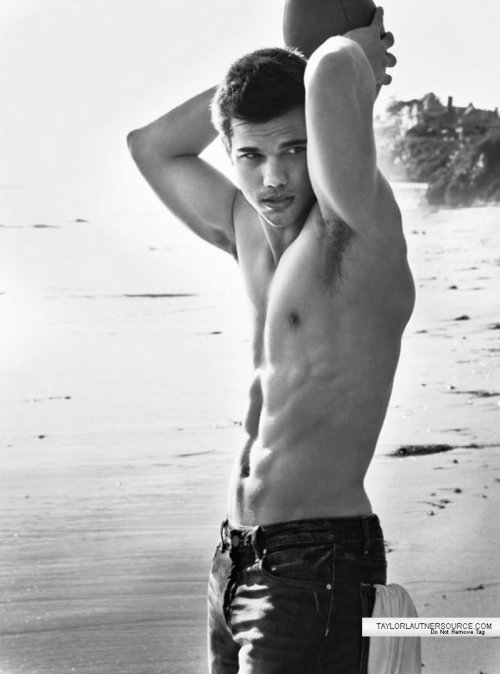
I can't decide if it would be harder for me to write the lead quarterback or his head cheerleader girlfriend. I am much more comfortable with quirk. Characters who aren't quite comfortable in their own skin, who feel weird, who maybe don't have too many friends. I'm not saying any type of character is inherently better than any other, I'm just saying certain characters come easier for certain writers. I just don't see Taylor Lautner fitting in one of my stories anytime soon. Mark Ruffalo maybe :)

So now what. I don't know about you guys, but when someone says I "don't do" something, even if that someone is myself, the contradictory wave rises in me and I think, "Oh yeah? Watch me." Who needs limitations, right? But if we're not going to let ourselves be restricted by these uncomfortable characters, how do we deal with them? I've thought of two ways:

First, work with them anyway. So Traditional Football Hero is my weak spot. I'll think up a short story for that character and try it out. You don't have to stay with the character for more than a day, but it could be a good way to stretch some creative muscles.

Or else, quirk them up. As in, morph them into something your more comfortable with. Maybe I start with Traditional Football Hero but actually he's super shy and secretly hates sports. Or maybe he's a total jerk and ends up being the true antagonist, a la Doctor Horrible's Sing-a-long Blog. I'd be comfortable working with that :)

Your turn. What would be the hardest character type for you to write? Do you think trying them out in a short story or novella would be a valuable exercise?

Sarah Allen

Thursday, July 11, 2013

Writing Challenge: Describing Eyes

The eyes are the window to the soul, right?

And they are one of the hardest things to describe and not make cliche.

Ugh. Can you tell I've been having cliche battles?

Eyes have been described so many times it feels like there's no way to talk about them without sounding completely trite. We all know the words: deep, haunting, piercing. But what do those words really mean? How do you really get the image into the readers mind?

The best way, I've been thinking, is to take the known and expand it as best you can. So, for example, rather than saying
He had clear, hazel eyes that made me shiver.
you could maybe say something like
He had clear eyes the color of sand, eyes that somehow always left me wondering if I'd seen them right, like I'd looked at the sun too long. Eyes that always left me wondering where he really went at night.
Better, right? Kind of? More interesting at least.

So now I put it to you. I'll give you a picture of a character with eyes that are...well, haunting, deep, piercing. Go all out. See what you can do.

Wednesday, June 26, 2013

Challenge: Write in the Genre You Could Never Write


We've all got the genre that is our genre. The one, maybe two, genres we usually work in. Then there are genres that are more on the periphery, that we read occasionally and think would be fun to write one day.

Then there is the genre that you look at and go, whoo boy, I could never write that.

I can think of a couple right off the bat.

Historical fiction. I so admire anyone who writes historical fiction, because I am so intimidated by the amount of research it seems like it would take. You want the story to pop, to be as real life as the world outside the window, and it just seems so hard to do that for a time that's not...well, now.

Christian romance. While I do think every story could do with a little lovin in it, I feel like specifically Christian romance would be so much harder than it looks. I feel like it would be incredibly difficult to get the writing so that its not cheesy or didactic, and anyone who trods in this territory, my hats off to you.

That being said, I think it could be a cool experiment to make myself write a short story or two in these genres. Alaska in the 1700s, maybe, or some story involving a preachers widow and an architect.

What about you? What's the one genre that intimidates you the most?

Sarah Allen
[img src]
Related Posts Plugin for WordPress, Blogger...